
Pets On A Plane: Flying Your Pet As Cargo
August 2026
(If you haven't read it yet, Pets On A Plane: Checking Your Pet As Baggage is the prequel to this article. Some things in here will make more sense after reading that even if you plan to ship your pet as cargo.)
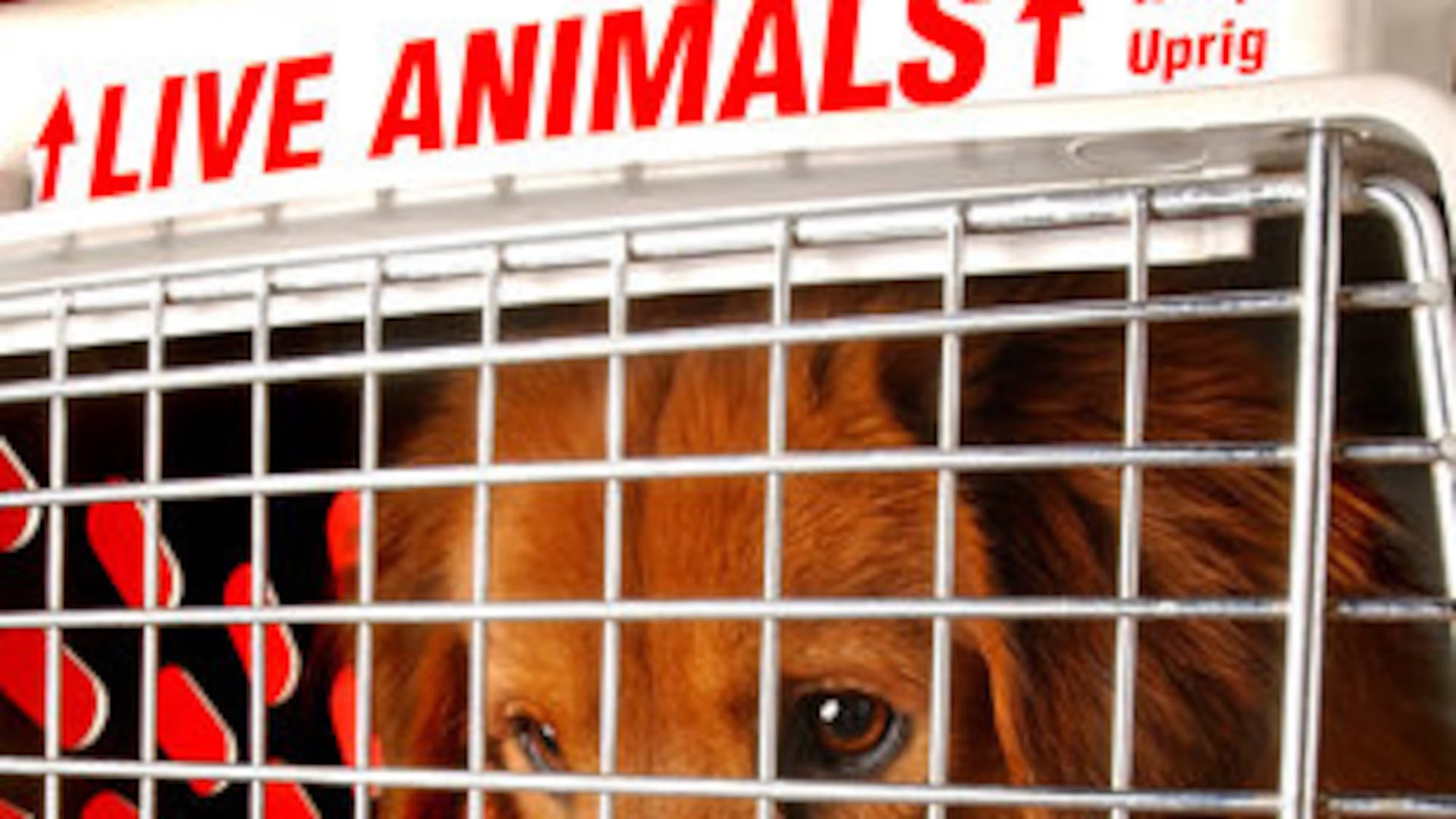
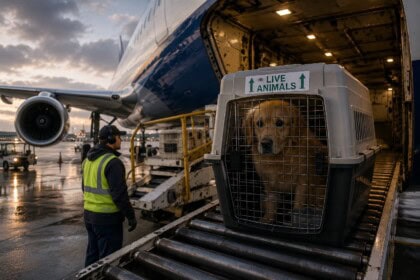
Flying your pet as cargo is essentially shipping them as freight, but they are not treated as freight. They are treated as extremely precious cargo.
What Airlines Ship Pets As Cargo?
Only two major US airlines operate dedicated manifest cargo services for civilian pets: Alaska Airlines (Pet Connect) and American Airlines (PetEmbark). While Alaska and Hawaiian Airlines have merged, Pet Connect remains an Alaska Cargo product. Their rules and restrictions are fairly consistent across domestic routes not involving Hawaii or Alaska. Their websites are quite informative so be sure to start there if you're considering shipping your pet as freight.
What Is Different From Checking Them As Luggage?
Separate terminal: you will not go to the main ticketing terminal. You will bring them to the freight terminal instead. This is usually a smaller, quieter terminal on the edges of the airport.
Arrival window: Your pet must be checked in and accepted no later than 2 hours prior to take off but do not arrive more than 4 hours before take off. (If you are traveling out of Hawaii then it's 3-4 hours.)
Paperwork: In addition to the standard airline paperwork (ID, ticket info, vet paperwork), you will also need a Food & Water Certification stating you've offered your pet food and water in the last four hours.
Air Waybill: You will need your Air Waybill which you will receive when you book your pet's flight. The AWB is a unique freight tracking number for your pet that is scanned every time their carrier is handled and their status and location are uploaded to the system.
Unaccompanied: Their flight is not tied to their furparent's flight. They are not necessarily on the same plane as their furparent. If their furparent's flight is delayed or cancelled, it does not affect the pet's cargo flight.
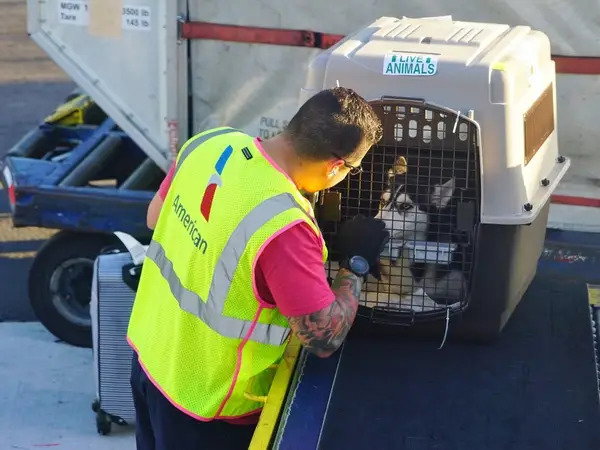
Trained Handling: Live animals are processed at the terminal by cargo agents certified in live-animal regulations (IATA LAR). On the tarmac, ground crews follow strict priority protocols for live freight—ensuring crates are loaded last, offloaded first, and kept clear of hazardous conditions.
Retrieval: They are retrieved from the arrival freight terminal, not baggage claim.
Cost: there is no pet fee. The shipment is charged according to the total combined weight of the kennel and the pet as well as how far it is traveling.
Booking timeline: Cargo space cannot be reserved months in advance. Booking windows are strictly limited close to departure —typically opening 24 hours to 10 days out for PetEmbark, and up to 35 days out for PetConnect.
What Is The Same As Checking Them As Luggage?
The cargo hold: they fly in the same planes and in the same cargo hold as passengers and checked pets (though not necessarily the same plane as their furparent).
The carrier regulations: the regulations are the same with the following exceptions:
Size: the pet absolutely cannot touch the sides or top of the crate at all. The manifest agents are much more strict about this than the ticketing agents.
4-sided ventilation: if your pet will be traveling to, from, or through Hawaii then their carrier must be ventilated on all four sides.
Live Animal Labels and Orientation arrows: The crate must have Live Animal stickers (with letters at least 1 inch high) on the top and on at least two sides. It must also have green or red "this side up" orientation arrows on two opposite sides. If these are missing or faded, cargo agents will force owners to buy stick-on sets at the terminal counter (if available) before accepting the pet.
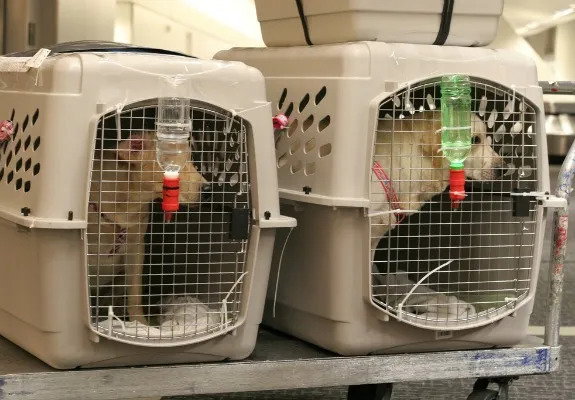
Attached Food/Water Bowls & Exterior Feeding Pouch: Metal or plastic food and water dishes must be attached to the inside of the kennel door so they can be filled from the outside without opening the crate door. A small bag of the pet’s food (enough for 24 hours) must be taped to the top of the kennel in a clear Ziploc bag along with written feeding instructions.
Prohibited Crate Items (Safety Hazards): Anything inside the crate that could pose a choking, strangulation, or health hazard during flight is banned.
Absorbent bedding only: towels, blankets, or specialized absorbent crate pads are required. Loose straw, hay, wood shavings, or newspaper litter are strictly prohibited.
No hard toys or bone chews: hard plastic toys, bones, or heavy chew items are prohibited because they can cause injury if the crate shifts during turbulence.
No collars, harnesses, or leashes on the pet: the pet should be "naked" with no collar, harness, or leash. They should be taped to the outside of the crate or stowed in the pouch.
The banned breeds: short-nosed dogs or cats are not permitted to fly as cargo due to respiratory issues under duress.
The 45°F to 85°F weather embargo: if the temperature at any point in your pet's route will be outside that range, they will not be able to fly. The exception is pets who have an acclimation letter signed by a licensed veterinarian saying the pet is okay to fly in temperatures between 45° F and 20° F. The airlines will not fly pets in temperatures colder than 20° F.
Minimum Age & Litter Rules: puppies and kittens must be at least 8 weeks old and fully weaned to fly. Additionally, if someone is shipping two young pets in the same crate, they must be between 8 weeks and 6 months old, weigh under 20 lbs each, and be of the same species/littermates. Any pet over 6 months must fly in its own individual crate.
Contact Labeling & Clear Pouch: The outside of the crate must have a clear waterproof pouch containing the CVI, food/water declaration, and a label clearly listing the full addresses of the shipper and the receiver (consignee) as well as their 24 hr phone numbers, and the pet's name.
A Day In The Life of a Cargo Pet
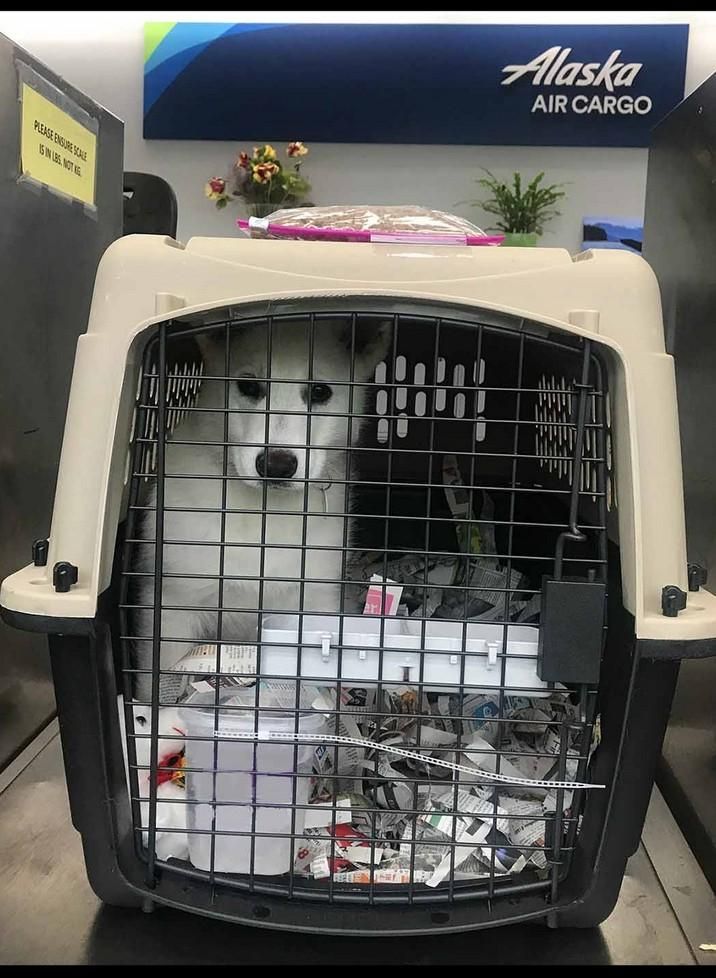
Cargo Terminal: You will arrive not at the main ticketing terminal but at a separate cargo terminal that is usually quieter with shorter lines. It does not look at all like a passenger ticketing terminal. It looks more like a Fedex or UPS warehouse.
Document Check & Balances: A cargo acceptance agent will examine your paperwork and make sure that all required documents are in order. Then your pet will be weighed inside the carrier on a large floor scale. Based on this and your pet's destination, you will be given the cost of the shipment and payment is expected at that time. The cargo acceptance agent will examine the carrier and make sure it has metal hardware (not the plastic hardware found on many retail carriers) and that it has pre-drilled holes for hand releasable zip ties (or quick-release seals) that will secure the door from opening from the inside.
Behind-the-Scenes Security: Once you hand your pet over to the cargo acceptance agent at the counter, your job is done and you will be asked to leave the warehouse area. The actual security screening happens entirely behind closed doors in a restricted zone. Because large cargo crates cannot fit into standard passenger X-ray machines, TSA personnel and certified cargo handlers will inspect the crate manually. Depending on the airport, they may use a physical hand-check or utilize highly trained Explosive Detection Canines (bomb-sniffing dogs) to screen the exterior of the crate without ever needing to open the door or disturb your pet.
| Make sure to remove the pet's harness or collar prior to loading back into the carrier. Place them in the waterproof pouch on the top of the kennel. (see carrier specs below) |
Last On, First Off: A special live animal cargo handler will take your pet to a climate controlled holding area to await boarding. Pets are always Last On, First Off to minimize their exposure to the effects of the weather.
Care/Comfort Stop: If your pet has a long connection (typically 6+ hours) or an extended journey, they will receive a dedicated Care Stop. Handlers will offer food and water, clean the carrier if needed, and let dogs stretch their legs. Due to escape risks, cats are almost never removed from their kennels during comfort stops unless cleaning is strictly necessary inside a fully enclosed, escape-proof facility.
Arrival: They arrive at a cargo terminal at their destination and should be retrieved 1-4 hours after arrival. Kennel charges may apply if they are picked up more than four hours after arrival.
Important Note on Sedation
Never, under any circumstances, tranquilize your pet before a flight. Airlines will outright refuse to fly a sedated animal because altitude changes can cause dangerous drops in blood pressure and/or respiratory distress. If you worry that your pet may experience high levels of anxiety, discuss it with your vet and ask for recommendations. If they prescribe an anti-anxiety medication, test it at home before travel day. Make sure it does not make your pet too sleepy such that they appear sedated.
What Can Go Wrong?
A lot of things, to be honest. But they are major inconveniences, not necessarily Life or Death. It is honestly very rare for pets to perish in the cargo hold anymore. The airlines have (forcibly) learned from their mistakes and have taken great measures to ensure that does not happen.
What does happen is misrouting of the pet due to delays and cancellations or weather embargos, and the pet and the parent become separated. They are almost always reunited but until they are, it's extremely stressful for both pet and parent.
How do they get separated?
If there is a delay and the plane is on the tarmac (not the taxiway), and the weather reaches an unsafe temperature, the pet will be pulled from the cargo hold and taken to a climate controlled area for safety. However, no announcement of this will be made so the pet parent most likely will have no idea this happened. The plane's priority is to get in the air asap, especially following a delay. That often means it takes off with the pet still in the climate controlled area in the terminal. So you get to your destination but your pet does not.
Take back control
Put a smart tracker inside the waterproof pouch on top of the carrier that contains the feeding instructions and emergency contacts. This way you can track your pet's carrier at all times.
Save the Facility Phone Numbers: before you even leave for the airport, add the direct destination phone number for the Airline Cargo Terminal Operations Desk to your contacts list. Call them the very moment your plane lands to verify your pet's current location and confirm the timeline for getting them safely back into your arms. Have your pets Air Waybill number ready to give to the agent on the phone. They cannot track your pet without it.
Make sure to put emergency contacts in as many points of your itinerary as possible. Be thorough in filling out the contact information and always provide a backup (or two).
Have a backup contact for while you are in flight and unreachable. Make sure that backup contact understands that they need to be 100% available during the time you are in flight.
| (Or, let me help. Get the Travel Day Guardian service and I'll be on-call and ready to find your precious pet if they get separated from you.) |
Relocate with Confidence
Flying a pet as cargo can feel overwhelming, but understanding the rules is the first step toward a successful journey. By treating your pet's travel like a premium, highly tracked shipment rather than a standard vacation, you can ensure they receive the highest level of care from certified live-animal handlers. While the cargo warehouse looks different from a passenger terminal, thorough preparation is the ultimate key to keeping your household together. With a clear plan, accurate paperwork, and the right gear, you can confidently watch your precious cargo take off and look forward to a happy reunion at your new destination.