
Crate Training Your Pet: It's Not Cruel; It's Comfort
August 2026
It is instinctual for us to feel that crate training is cruel. We feel like we are putting an animal in a cage they don't want to be in. How is that not cruel? The truth is, your pet doesn't view the crate the same way you do. Crate training may feel restrictive, but it is honestly in your pet's best interest.
Why Crate Train?
In nature, dogs live in dens. These dark, quiet, enclosed spaces—like burrows or caves—provide comfort and protection. A crate recreates this instinctual environment. Crate training is highly beneficial because:
- It provides a safe retreat: it gives your dog a soothing, comforting place that is entirely theirs when family life gets too chaotic.
- It ensures safety: there will be times in your pet's life when a crate is the safest place for them to be.
- It simplifies travel: if your dog already has a positive association with a carrier, travel or vet visits become much less stressful.
When should you start crate training?
Immediately. The day you bring them home, regardless of how old they are. But let's start with crate training a puppy.
Crate training to house break
A Note of Reality: If you have just adopted a very young puppy—or are thinking about it—you need to make a firm commitment to that animal right now. You are going to have to temporarily forego sleep, television, gaming, or whatever else you enjoy to get up and let them out exactly when they need to go. Housebreaking a young puppy is nearly as exhausting as taking care of a newborn baby. I know this because I have done both. If you want your puppy to succeed, you must be ready to put in the work.
Why crate training works to house break a puppy
Animals do not want to mess themselves or potty near where they will sleep. This is why crate training is the single best way to house break a pet.
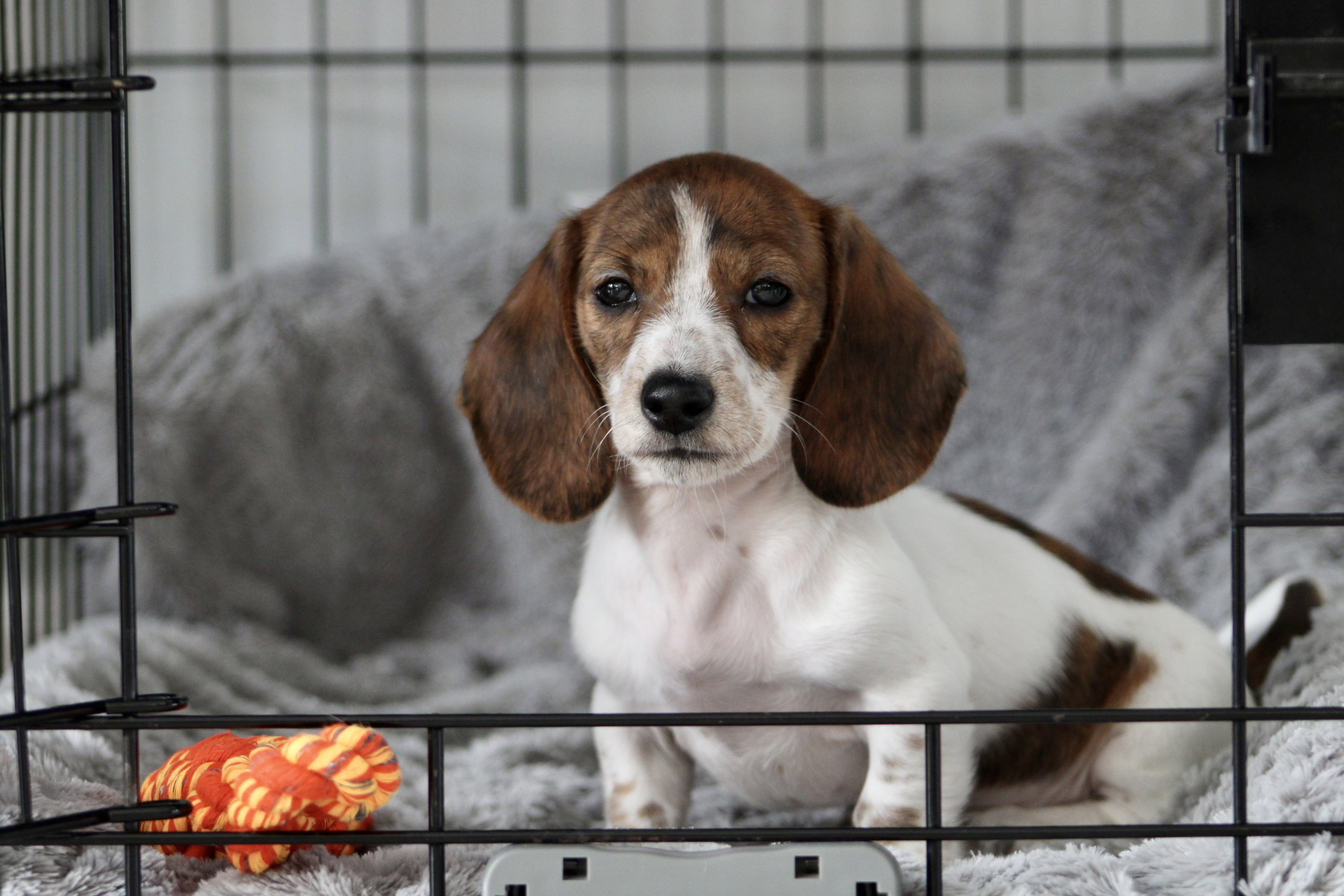
Crate sizing is everything. When housebreaking a puppy, choose a smaller crate or buy a large crate with removable dividers that grow with your pet. The puppy should only have enough room to stand, turn around, and lie down. If the crate is too large, they will simply potty in one corner and curl up comfortably in the opposite corner, completely defeating the purpose.
Skip the soft bedding during the initial housebreaking phase. Leave the bottom as a bare plastic tray. Bedding can easily absorb accidents, allowing a puppy to scratch the wet blankets into a corner and sit comfortably on the dry side.
Time To Potty the Puppies
Housebreaking requires a strict schedule tailored to your puppy's physical development. Puppies have tiny bladders and zero physical control.
1-8 weeks old: let them out to potty every 30-60 minutes as well as immediately after eating, drinking, or waking up.
8-12 weeks old: you can extend their hold time to 2 hours, but still should bring them outside immediately after eating, drinking, or upon waking.
3-6 months old: they can generally hold it one hour for every month they are old.
3 months old = 3 hours max
4 months old = 4 hours max
5 months old = 5 hours max
6-8 months old: they can usually hold it overnight but should never be forced to hold it for more than 8 hours. Doing so can cause painful urinary tract and bladder infections.
For the best long-term health and comfort, adult dogs should get a potty break every 4 to 6 hours during the day.
Consistency is Key
You want to prevent accidents at all costs, not just to protect your carpets and rugs, but because a single accident sets the puppy back mentally.
To achieve this safely, utilize a strict rotation. When the puppy is not actively eating, playing, or under your direct supervision, they should be resting safely in their crate. This structured predictability teaches the puppy exactly what to expect, making the entire housebreaking process fast and stress-free.
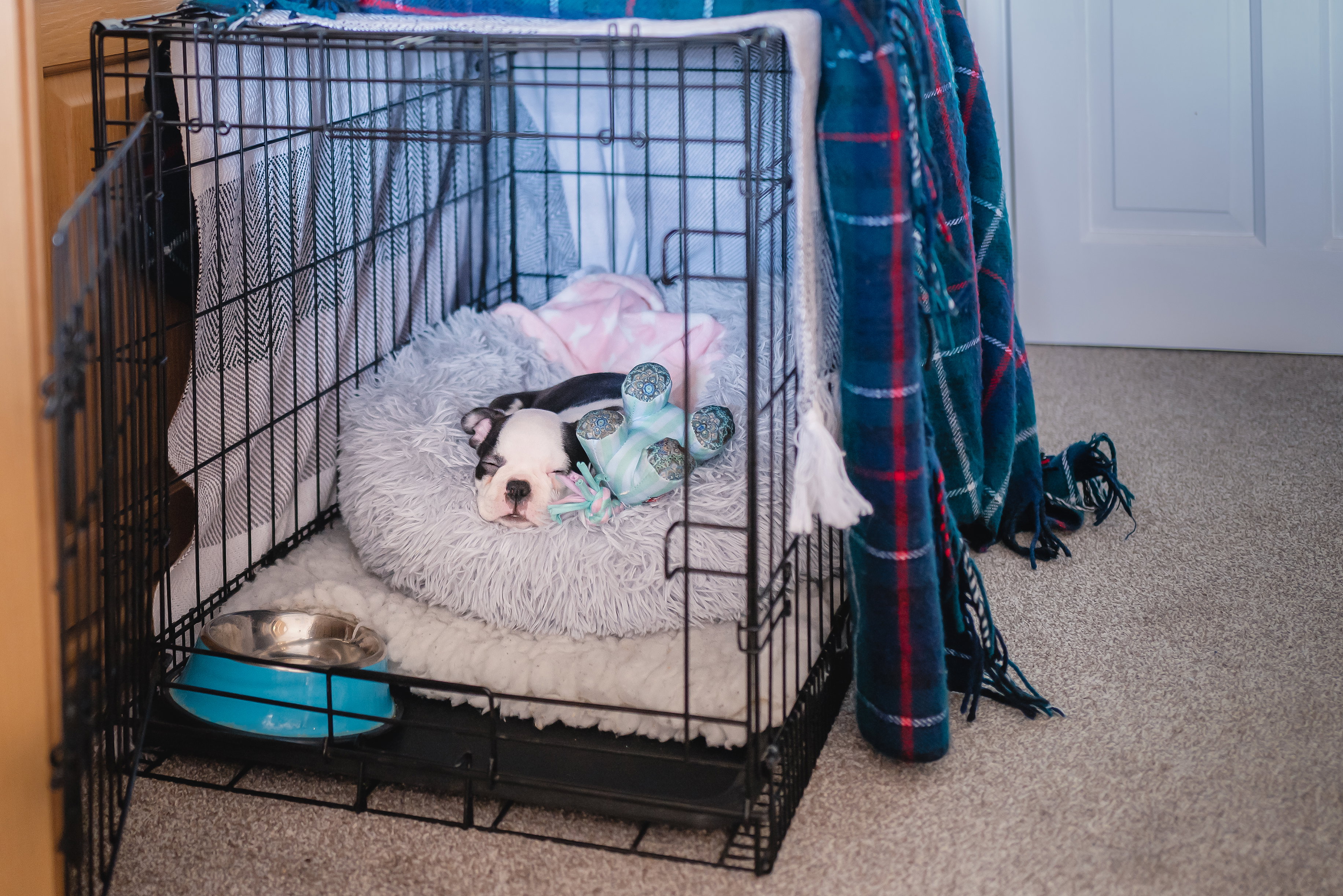
What about at night? Where do I put the puppy / crate at night?
For the first few weeks, the crate should be right next to your bed. The puppy can smell you, hear your breathing, and know they aren't abandoned. If they start to whine out of fear, you can simply drop your hand down next to the wire door to comfort them without letting them out.
Differentiate the Boredom Cry and the Potty Cry
Puppies will cry for two reasons: fear/boredom, or a physical need to potty.
- The Rule: If the puppy has been quiet for a few hours and suddenly wakes up crying, it is almost always a bathroom emergency.
- The Fix: Take them out immediately, but keep it strictly business.
The Midnight Potty Run
If you have to take the puppy out in the middle of the night, it should be the most boring event of their life.
- Keep the lights off or very low.
- Do not talk to them, praise them in an excited voice, or play with them.
- Carry them straight to the potty spot, give your potty command, and carry them straight back to the crate.
- This teaches them that crying at night only gets them a boring toilet break, not playtime.
Provide a Comfort Item
Using a heartbeat toy (like a Snuggle Puppy) or a warm hot water bottle wrapped in a towel can simulate the feeling of sleeping with their littermates, which naturally soothes them to sleep.
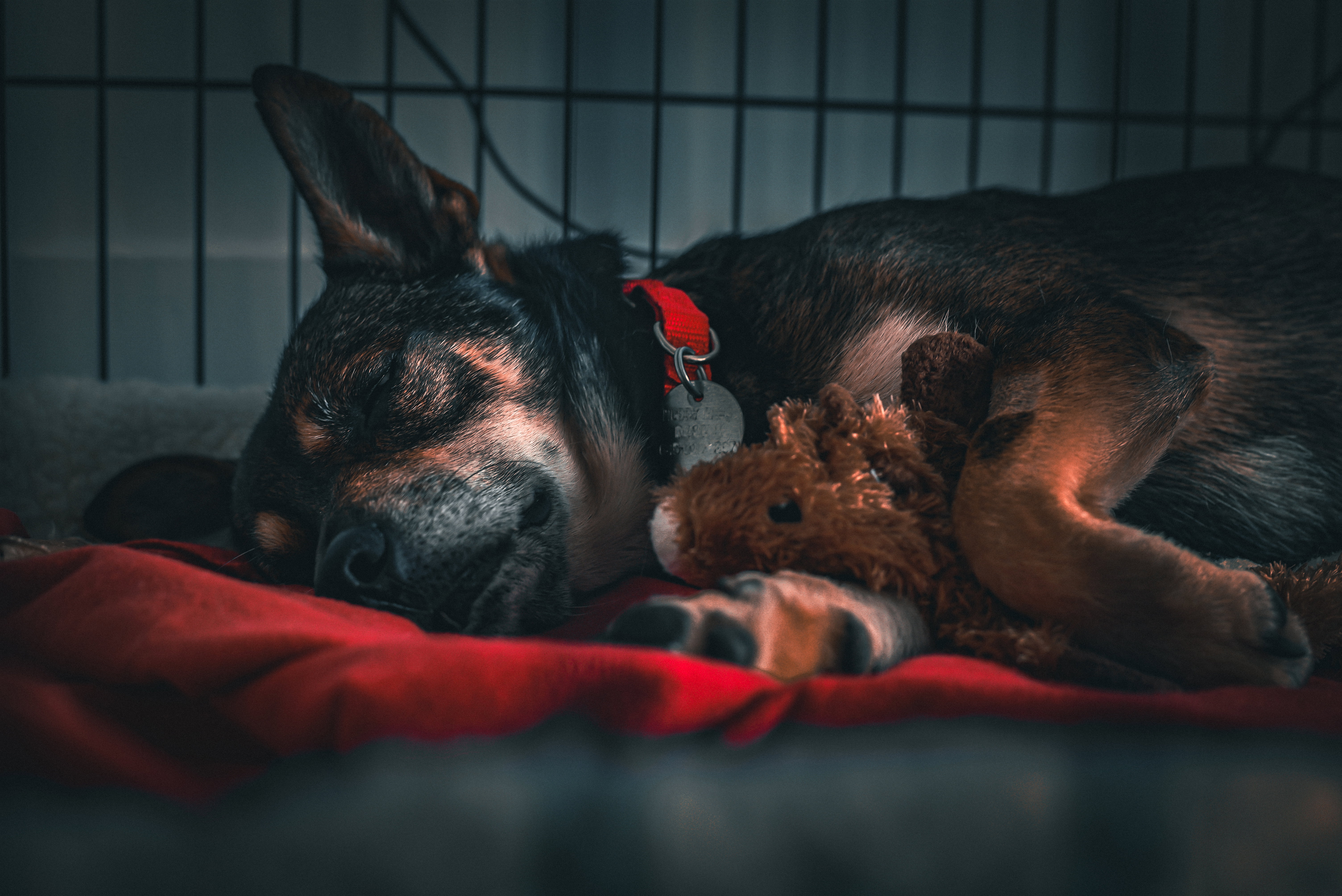
Crate training an adult dog
Sizing a crate for a housebroken, adult dog is different than sizing one for a puppy you are housebreaking. To find the perfect size, measure your dog from nose to tail, and from the ground to the top of their ears.
- The Size Rule: choose a crate slightly bigger than your measurements. Your dog must be able to stand up and turn around without catching their ears or fur on the sides or top.
- Account for Bedding: add a couple of extra inches to your measurements to leave room for blankets or a bed.
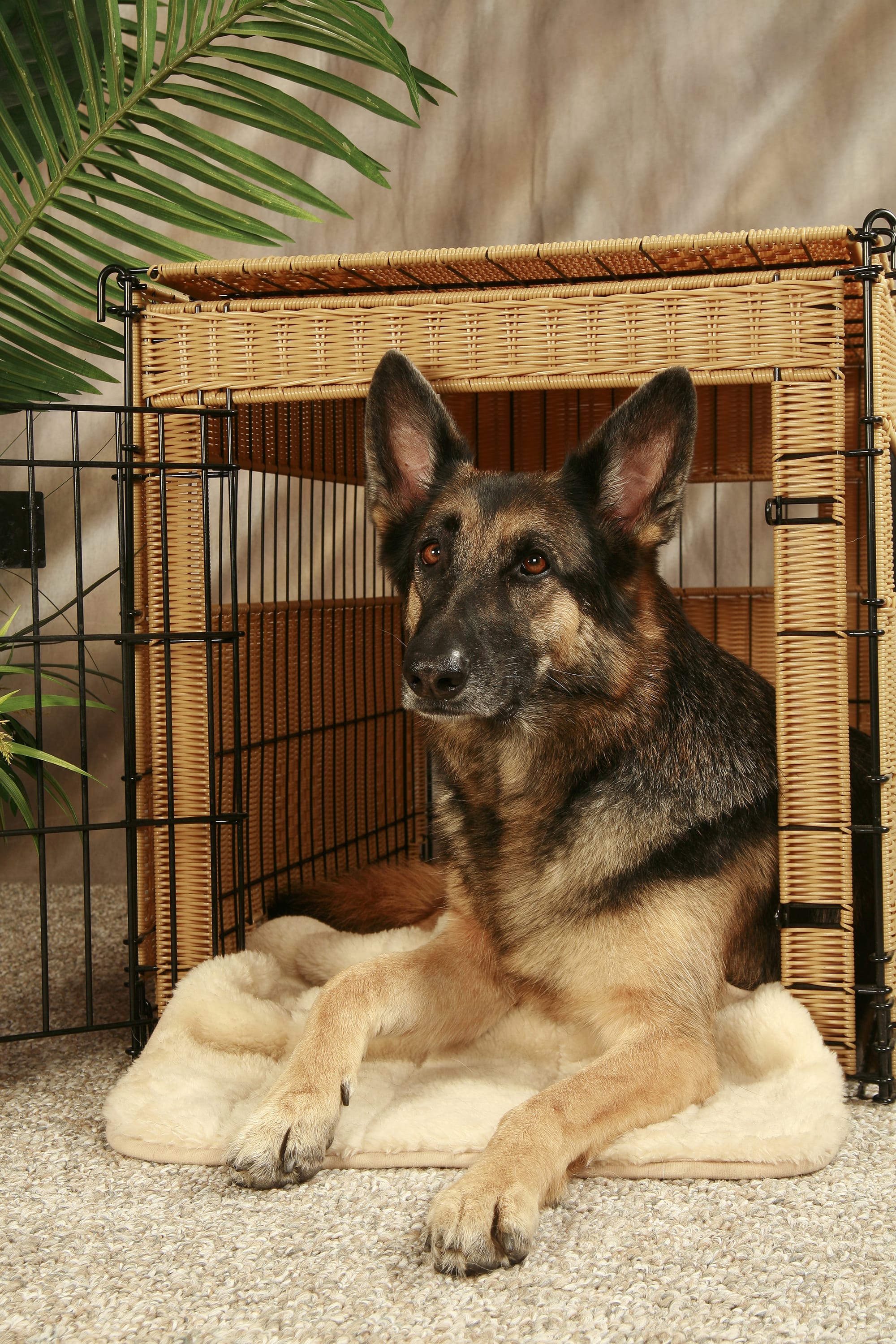
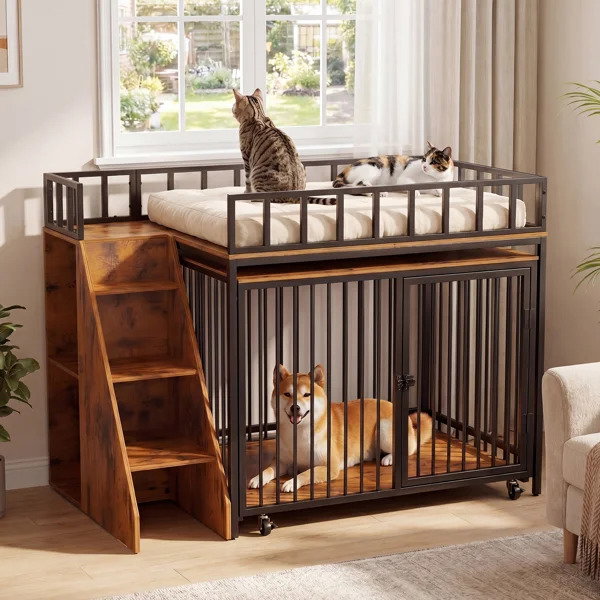
- Crate Furniture: there are many beautiful furniture-style crates available today. However, wait until your dog is fully trained before buying an expensive, delicate piece. Dogs can be extremely destructive when attempting to escape; start with a sturdy metal wire cage.
Where to put the crate
You want to set up the crate in a common area but off to the side, such as a quiet corner of the living room, family room, or den. It should feel like part of the family life, but removed from heavy foot traffic.
Training the Kids: if you have a household with young children, you will be training your children just as much as the dog. Teach them the following rules:
- The crate is not a playpen or a toy.
- It is a special place just for the dog, similar to a baby's crib.
- Just like older kids and pets stay out of a baby's crib, the kids must leave the dog alone when they are in their special space.
Crates and Room Ventilation
- Keep it breezy: crates should always be ventilated on at least three sides. This is especially vital for flat-faced or snub-nosed dogs.
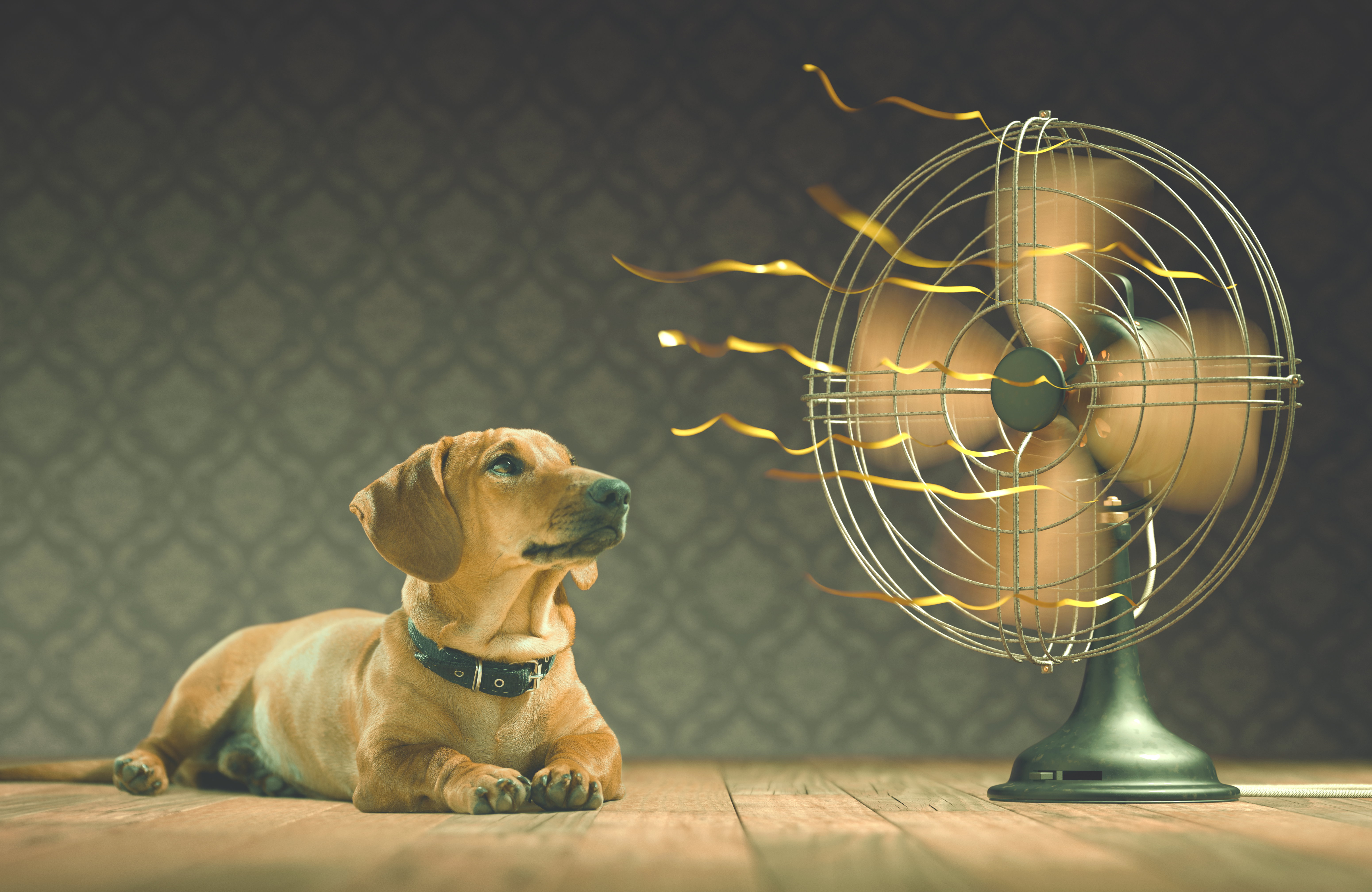
- Using fans: if your dog runs hot, place a fan nearby to circulate air. Never place the fan inside the crate, and keep the cord completely out of reach so it cannot be chewed.
- Watch the surrounding furniture: beware of soft fabrics near the crate. Your dog may decide to pull them into the crate. When I was crate training my German Shepherd many years ago, I left the crate at the foot of the bed and came home to half the down comforter inside the crate and feathers everywhere.
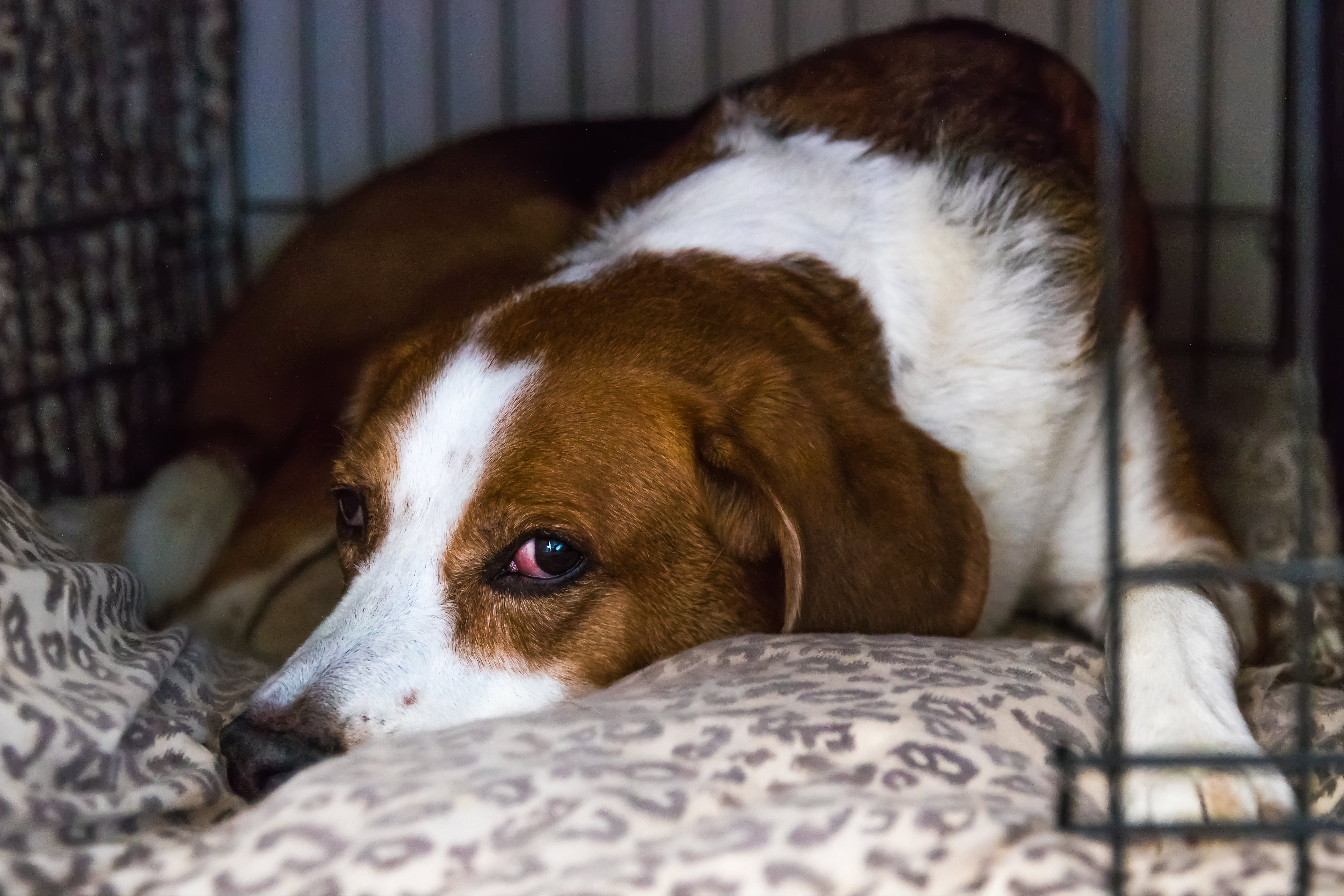
Making the Crate Comfy and Cozy
Before introducing your dog to the space, make the inside look and smell inviting.
- Add soft textures: use a thick dog bed or plenty of soft blankets and towels. Consider getting a crate cover or just draping some blankets over the outside if that seems to calm your pet (but beware of the above mention of them pulling it inside).
- Add your scent: toss in a couple of your worn t-shirts so your scent comfort them.
- Choose toys wisely: include soft toys. Be very careful with hard toys at first.
- Remove gear: always remove all collars or harnesses before your dog goes into the crate to prevent snagging.
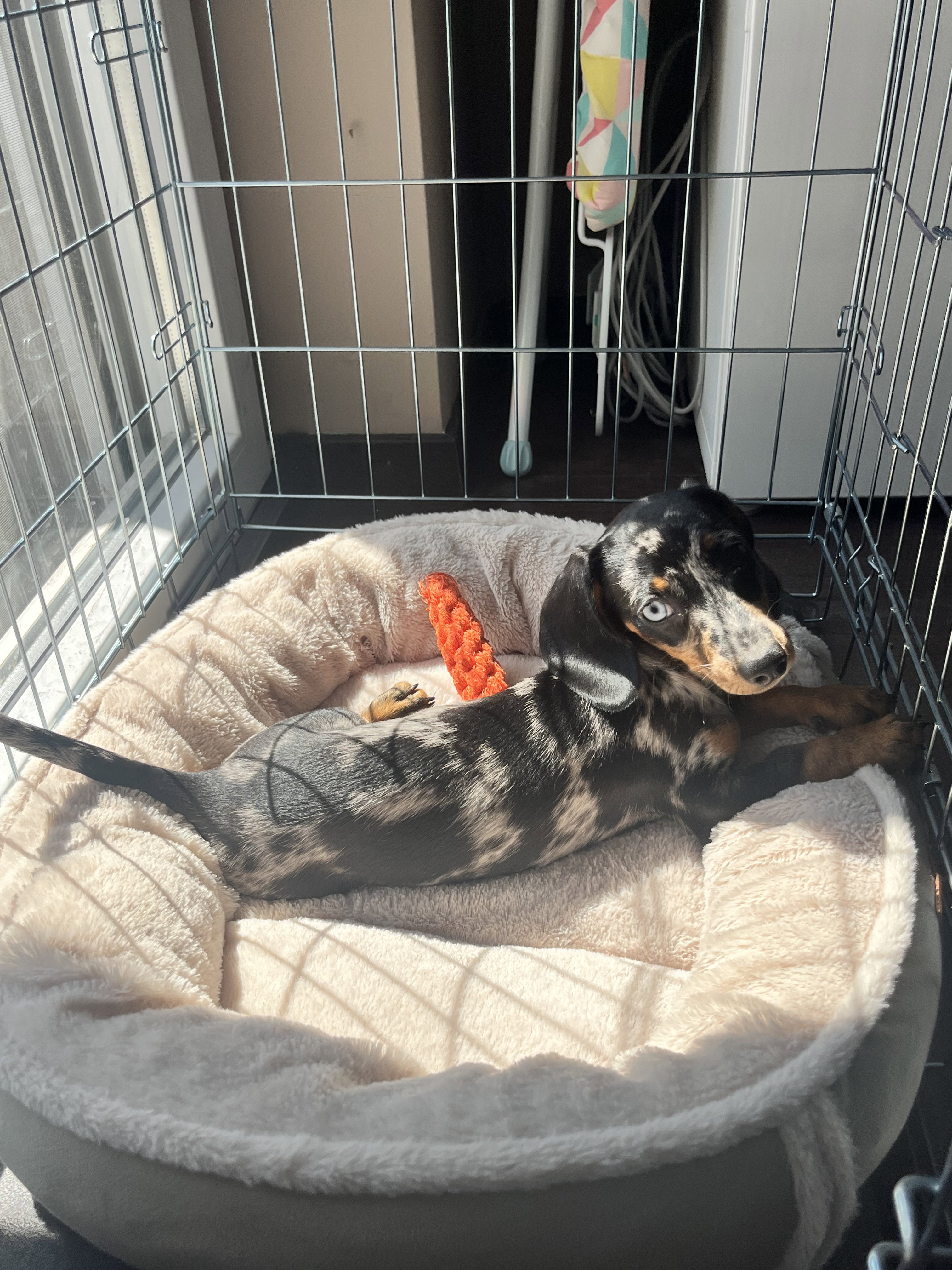
Week 1: The Invisible Crate
At first, put the crate in its designated place and prop the door wide open (or remove the door altogether). Make the inside super cozy, throw a few treats inside, and then completely ignore it.
Act casual: do not make a big deal out of the crate. Leave it alone for at least a week.
Toss random treats: Walk by and randomly drop treats inside when your dog isn't looking.
Do not react: your pet will naturally explore it. If they go in, offer zero reaction. If they don't go in, offer zero reaction. Pets are suspicious of new things; if you hover or make a big fuss, they will dart out fast and become wary of your intentions.
Week 2: Active Engagement
After a week has passed, you can start engaging with your pet near the crate.
Create positive associations: reward them with treats and affection if they willingly step inside.
Keep the door open: do not attempt to close the door on them during this phase.
Week 3: Closing the Door
After a full week of positive reinforcement with the door open, you can begin closing the door for very short periods.
- Stay close: at first, stay right next to the crate. Feed them treats through the wire and talk to them encouragingly.
- Keep it brief: Only leave them closed inside for a few minutes, then let them out.
- Randomize the timing: Repeat this process later in the day, but vary the lengths of time randomly. Always end the session on a positive, happy note!
Graduation: Leaving the House
When it comes time to leave your dog home alone in their crate, your main goal is to prevent separation anxiety. To do this, you must practice a "no drama" departure and arrival routine.
Avoid making a big deal out of leaving the house. If you hug your dog, use a sad voice, and prolong your goodbyes, you signal to your dog that your departure is a tragic, scary event. Instead, put them in the crate calmly and walk out the door without a word. When you return home, maintain that same calm energy. Ignore the dog for the first few minutes until they settle down, and only let them out of the crate once they are quiet and relaxed. This teaches them that your comings and goings are completely normal.
To make your departures even easier, introduce a jackpot crate toy that your dog only receives when you are walking out the door. A classic example is a Kong stuffed with peanut butter or wet food and frozen overnight. The act of licking releases calming hormones that naturally lower a dog's heart rate. It will take them twenty to thirty minutes of hard work to empty the toy. By the time they finish their treat, you have already been gone for a while, and your dog will be tired and ready for a nap.
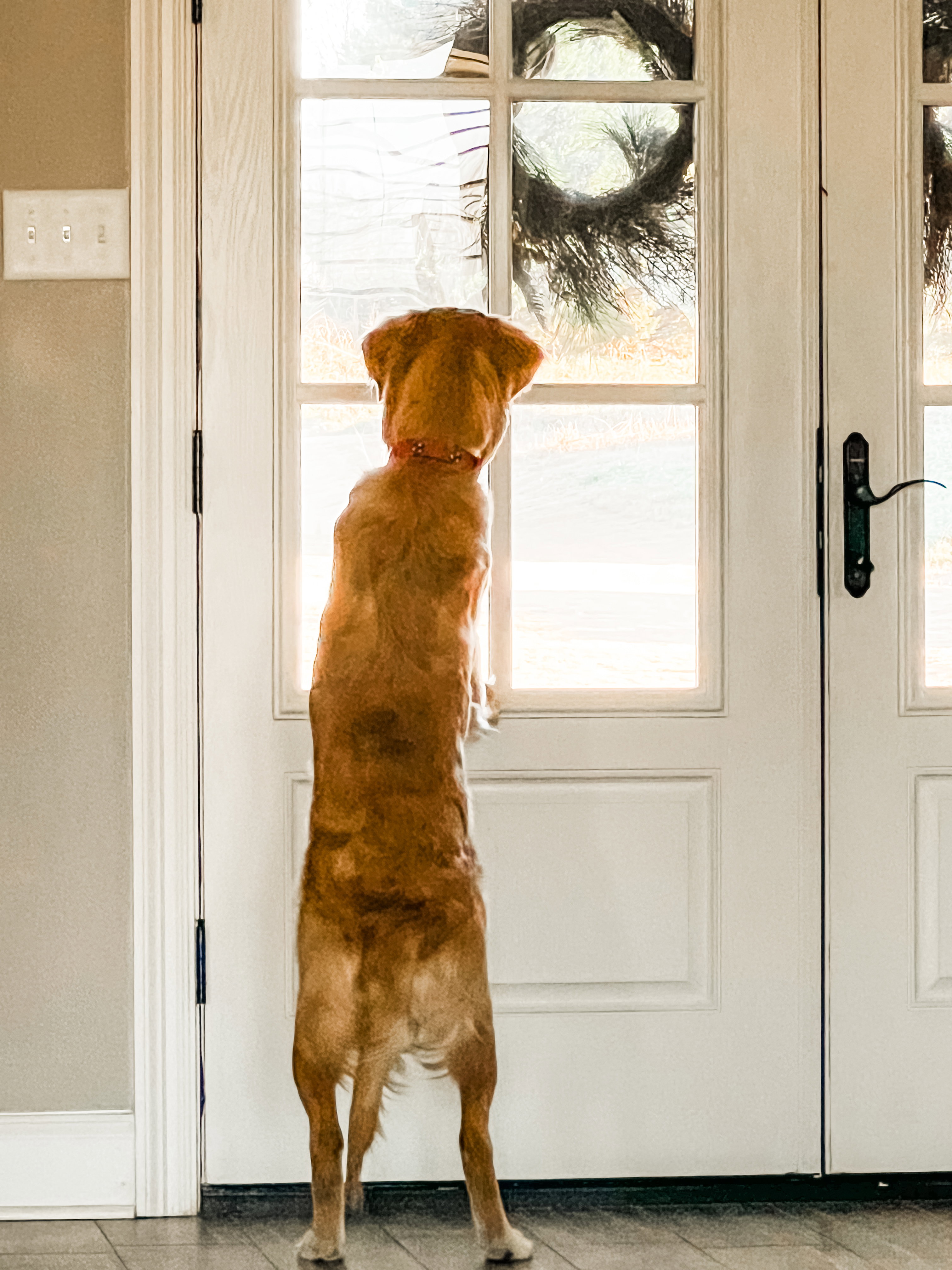
Practice Makes Perfect
If your dog is very young or is newly adopted and suffers from separation anxiety, or you're worried that it might, do some dry runs before you actually leave them alone. Pretend like you're leaving. Do all the normal things you would do upon leaving the house:
- calmly put them in the crate with their high value treat
- grab your purse, backpack, briefcase
- jingle your keys
- lock the door
Walk to the end of the driveway or sidewalk, just get out of aroma and hearing range. The first time, stay away for two minutes. Then five minutes. Then ten. Keep increasing it until graduation day, when you really leave.
It's Okay To Pivot
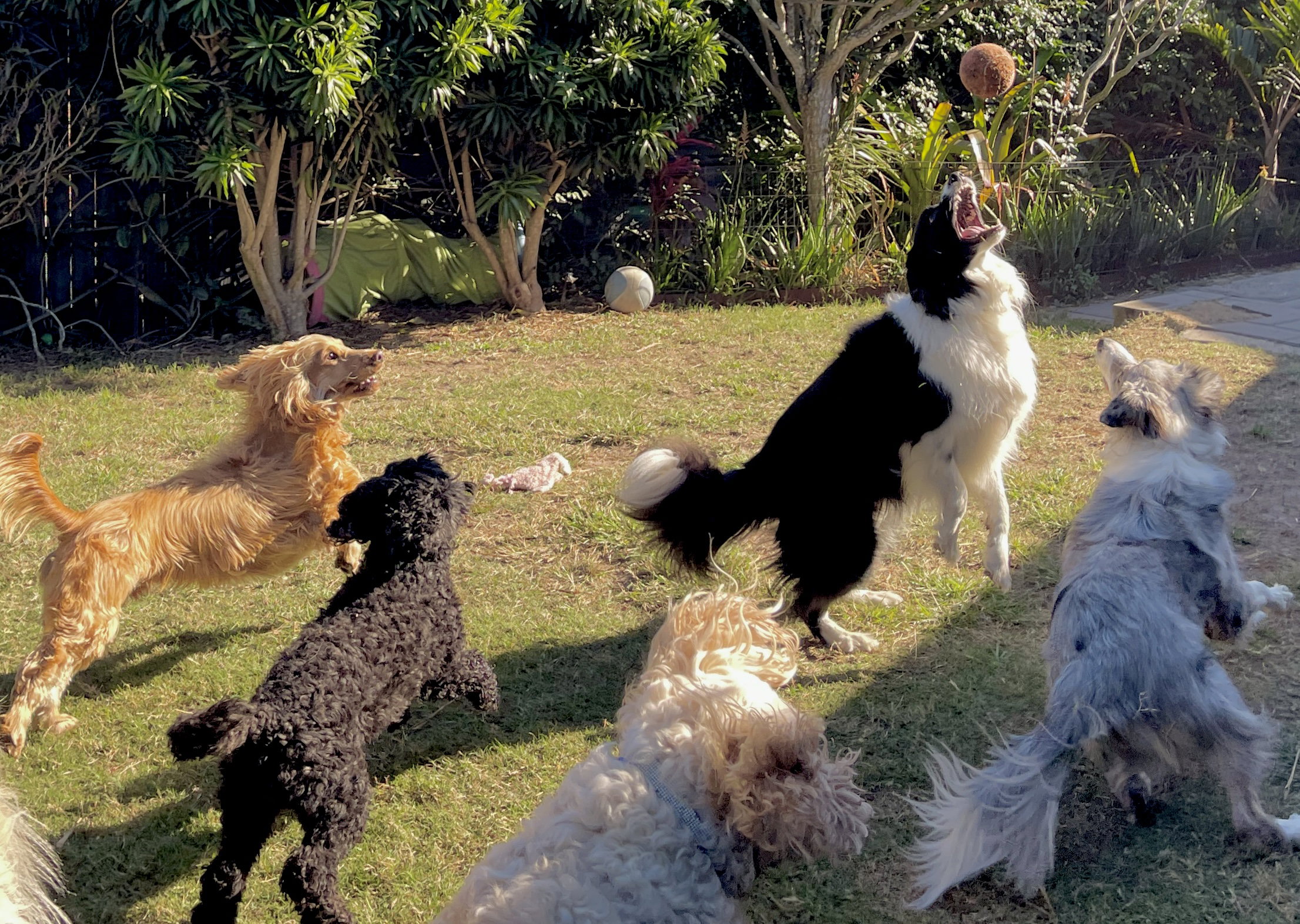
Finally, it is vital to recognize that while crate training is a wonderful tool, it will not succeed with every single dog. Some animals, particularly those with a history of trauma or severe separation anxiety, experience genuine, dangerous panic when confined. If your dog is injuring themselves trying to escape or showing signs of extreme distress, it is important to know when to pivot.
Instead of feeling like a failure or considering giving the dog away, remember that excellent alternatives exist. Enrolling your pet in a reputable doggie daycare provides them with a safe, supervised, and social environment during the day, ensuring they are cared for while keeping your home safe.