
Cat 3-3-3 Rule of Relocation - 3 Weeks

August 2026
3 Weeks – Territorial Mapping
By the third week, your cat realizes the immediate danger has passed and begins expanding their comfort zone. If you have not released them from basecamp yet, you can do so now. They will start exploring the rest of the house, sniffing every corner, and leaving their own scent (via cheek rubbing) to claim the new space.
Don't jump the gun: be very careful letting them out of basecamp early. Even if one or more of them seem ready, it could backfire if you release them from basecamp too soon. If they get startled, they could end up hiding somewhere very difficult to get them out of.
Wait for stability: There is likely still a lot of chaos going on in the rest of the house as you unpack. Wait until you’re at least 95% unpacked and things are where they’re going to be so that they can adapt to the newness without it changing constantly.
Baby Steps: Open up new rooms gradually rather than all at once. Close off other bedrooms and bathrooms and just allow them access to their basecamp and the common living areas, then open one new room a week.
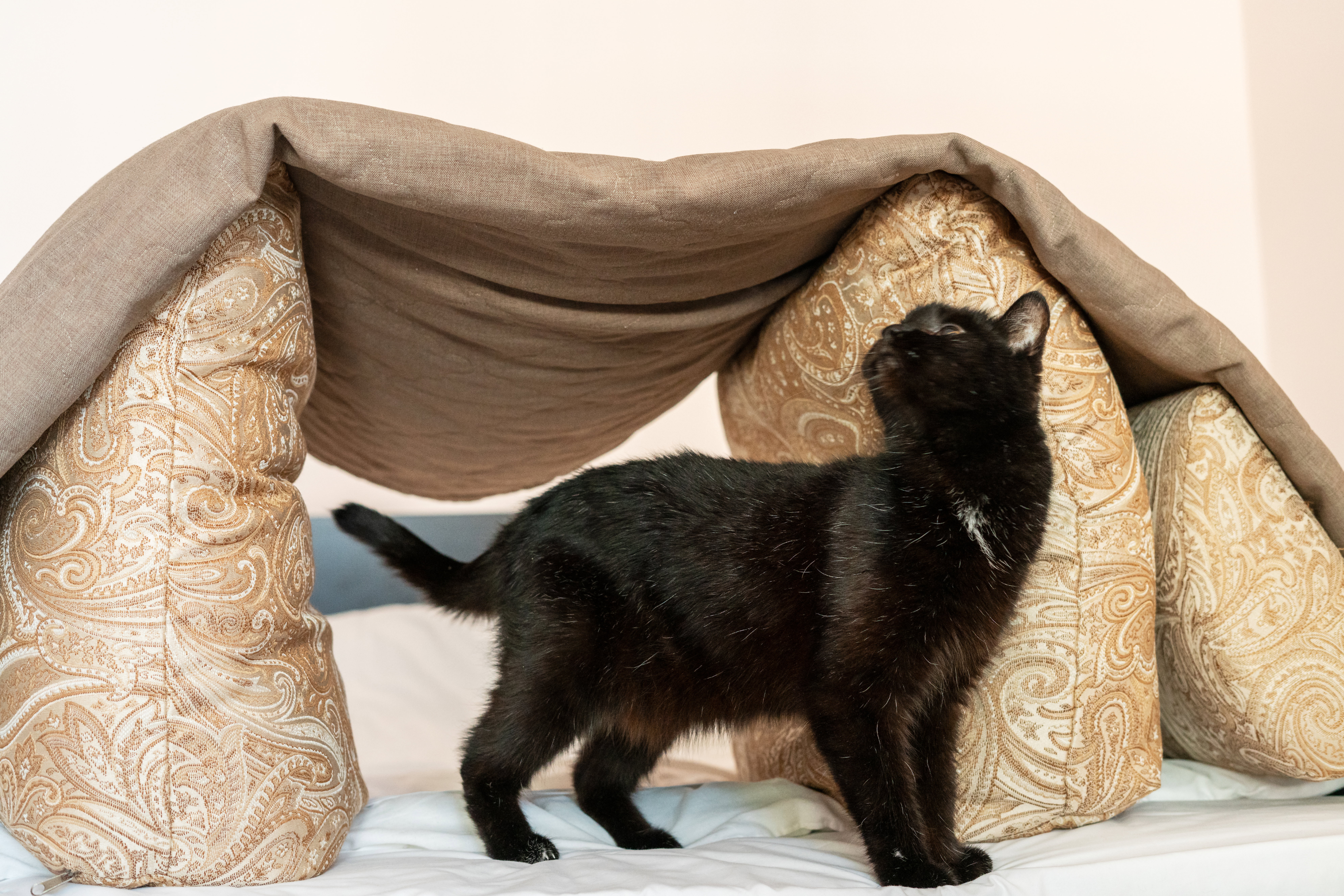
Comfy and cozy: Make the area right outside the basecamp super appealing. They should want to leave basecamp for it. Have cat trees and scratchers and beds and toys. If your common areas are like mine and have hard floors, make sure to get rugs and curtains and as much fabric as possible to deaden the echo of sound. Loud, echoey places make them feel exposed and overwhelmed. The space feels too big, too empty, too loud, too scary.
| It actually took a couple of months before I finally let my cats out of basecamp. After the move, I ran out of money and couldn't buy furniture right away. The common areas of the house had hard floors and were completely empty, making them loud, echoey, scary, and totally unappealing to the cats. Their basecamp, on the other hand, had carpet and was quiet and comfy. Out of my four cats, three had shown interest in exploring. But once I actually opened the door, only one brave soul ventured out. The other two walked up to the threshold, stopped short, and instantly lost all desire to leave their cozy sanctuary. As for the brave one? He didn't even enjoy it—he just wandered the empty, echoey halls yowling constantly. Instead of forcing it and making them hate their new home, I put him back into basecamp and decided to wait. It was definitely the right call, and the patience paid off in the end. |
Food & Water Bowls: Don't uproot their main dining station just yet. Keep their primary food and water inside basecamp, but begin placing additional secondary bowls out in the newly opened common areas. This rewards them with a snack for exploring without cutting off their safe access to nutrition.
Litter Boxes: As you open up the house, establish your permanent litter box locations in quiet, low-traffic areas. However, leave the original basecamp box exactly where it is for now. In a multi-cat household, a stressed cat may try to "guard" a new hallway box, so keeping the familiar basecamp option active prevents territorial fights and stress-induced accidents.

Positive reinforcement: Make sure to give them lots of pets and toys and treats as they venture into new areas. Help them associate all areas with positivity. Get (or make) some treat puzzles and leave them hidden around the house. (But check on them often so you don’t get ants.)
Catification: Now is the time to pay attention to where they linger, where their new favorite spots are, and consider how you can make those even more comfy and homey as time and money allows. (More on this in Part 3.)
| This is the time to start getting to know your new neighborhood and what pet services are in your area. My Welcome Waggin product will map out all pet services near you including vets, groomers, pet sitters, dog walkers, pet supply stores, and more (depending upon the area). It also includes information on getting the new city license, which you usually need to do within your first 30 days so you're coming up on that deadline about now. |
Looking ahead: While the immediate stress of the move has passed, your cat is still settling into the full rhythm of their new life. Next is the 3-Month Phase—where temporary adjustments turn into long-term trust, and your new house officially becomes your cat's forever home.