
Cat 3-3-3 Rule of Relocation - 3 Days
August 2026
3 Days – Re-establishing Safety
The first three days after a move are all about your cat adjusting to unfamiliar territory. Your new house has weird smells, different lighting, and all sorts of strange sounds. Your cat will likely feel disoriented and defensive. Try to keep feeding times and routines as close to your previous schedule as possible to provide a sense of continuity.
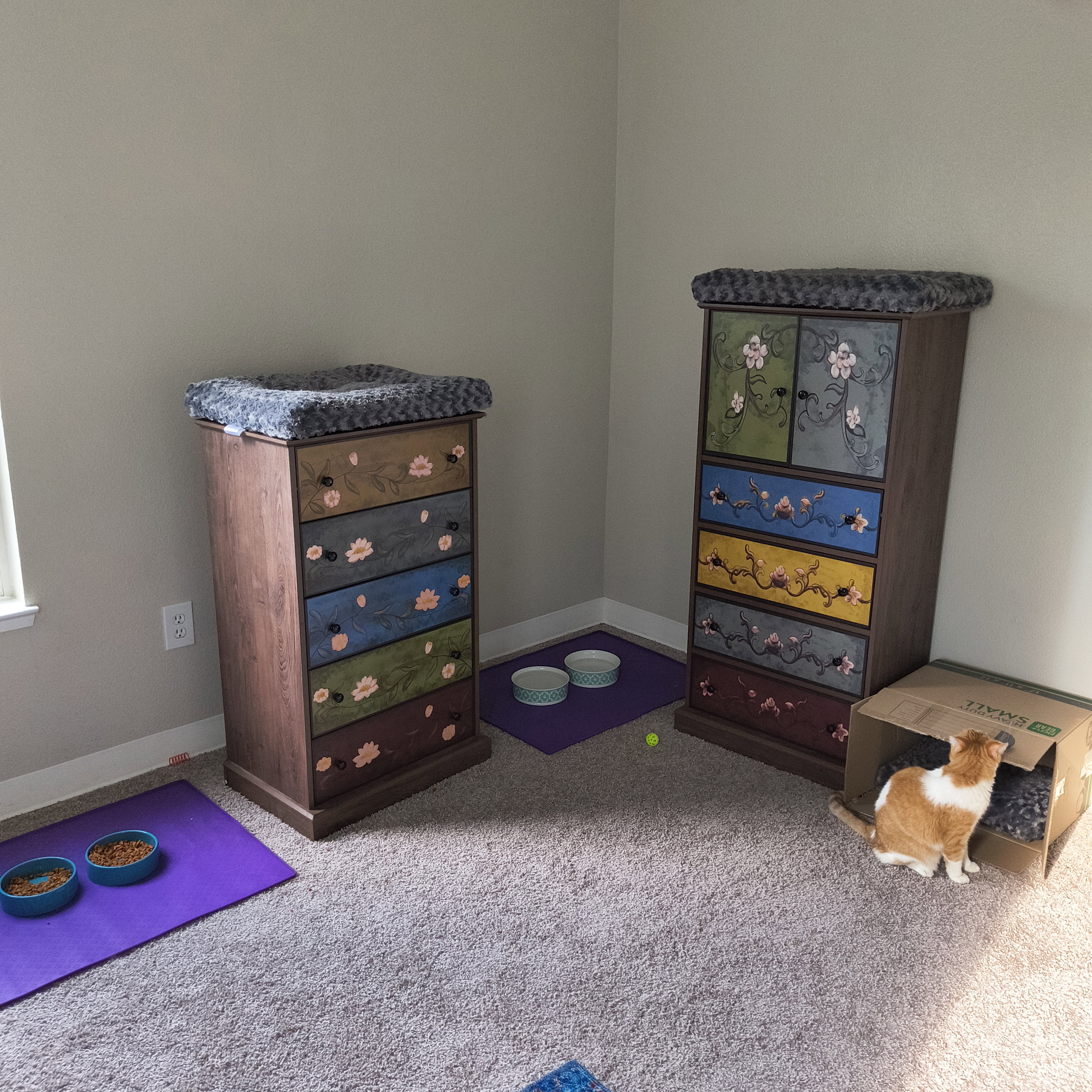
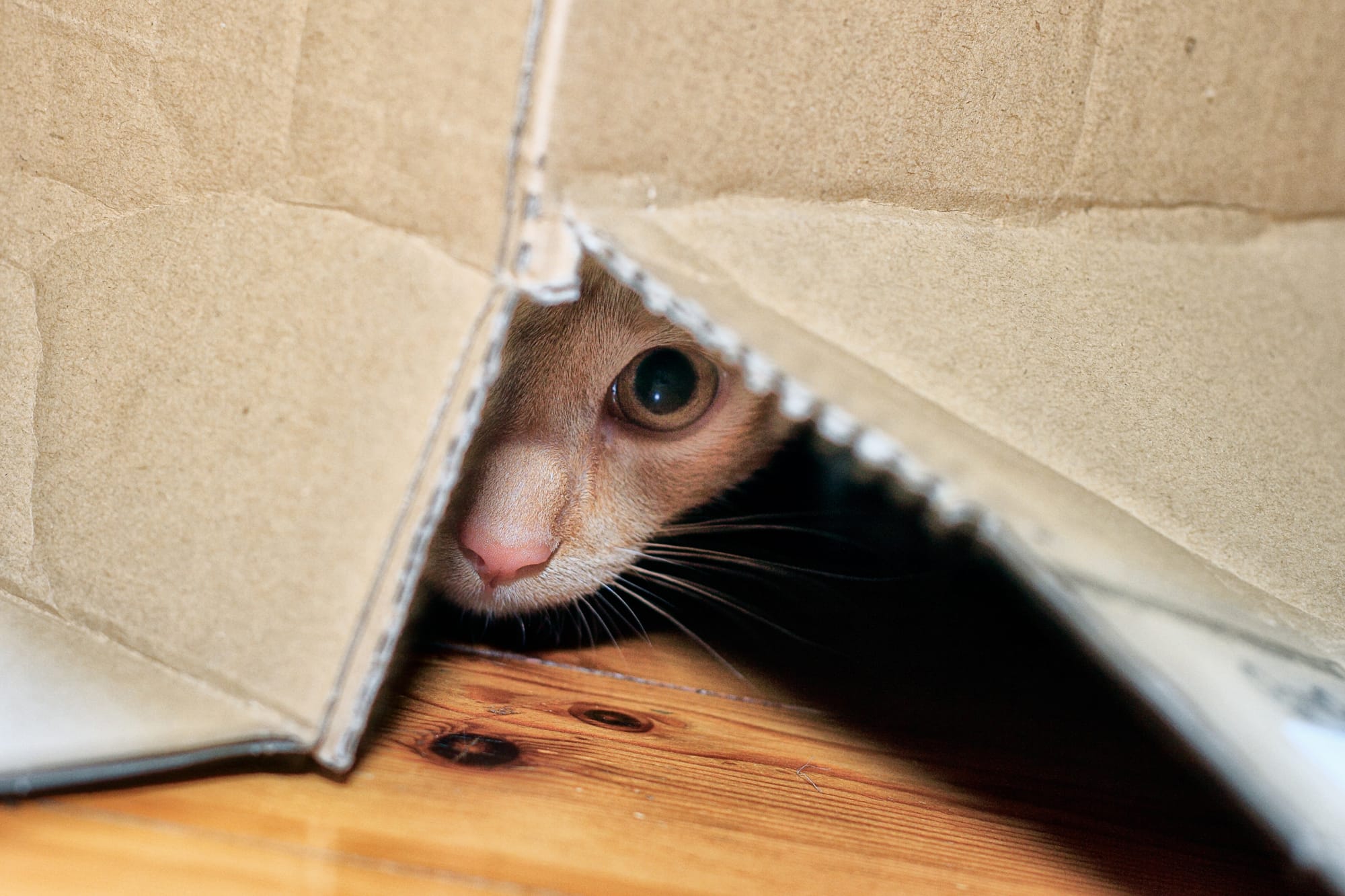
Patches is one of my four cats and my Lead Box Inspector so I made sure to keep one for her after we moved. This was their basecamp after we relocated from Pennsylvania to Colorado.
Basecamp: Keep them confined to a single, quiet room with familiar furniture, their unwashed blankets and/or beds, and their old litter box(es), if you can stomach bringing them unwashed. (While this is helpful, it’s not mandatory. I moved and bought all new litter boxes and they did just fine.)
Familiar surroundings: Include some cat trees or tall furniture so they have a high place to go to to make themselves feel more safe. But also include some carriers and/or nests and/or box forts they can use to hide in if they want. My cat Sherbet loves to hide under rugs or blankets. (Hence the cat shaped hump in the photo below.)
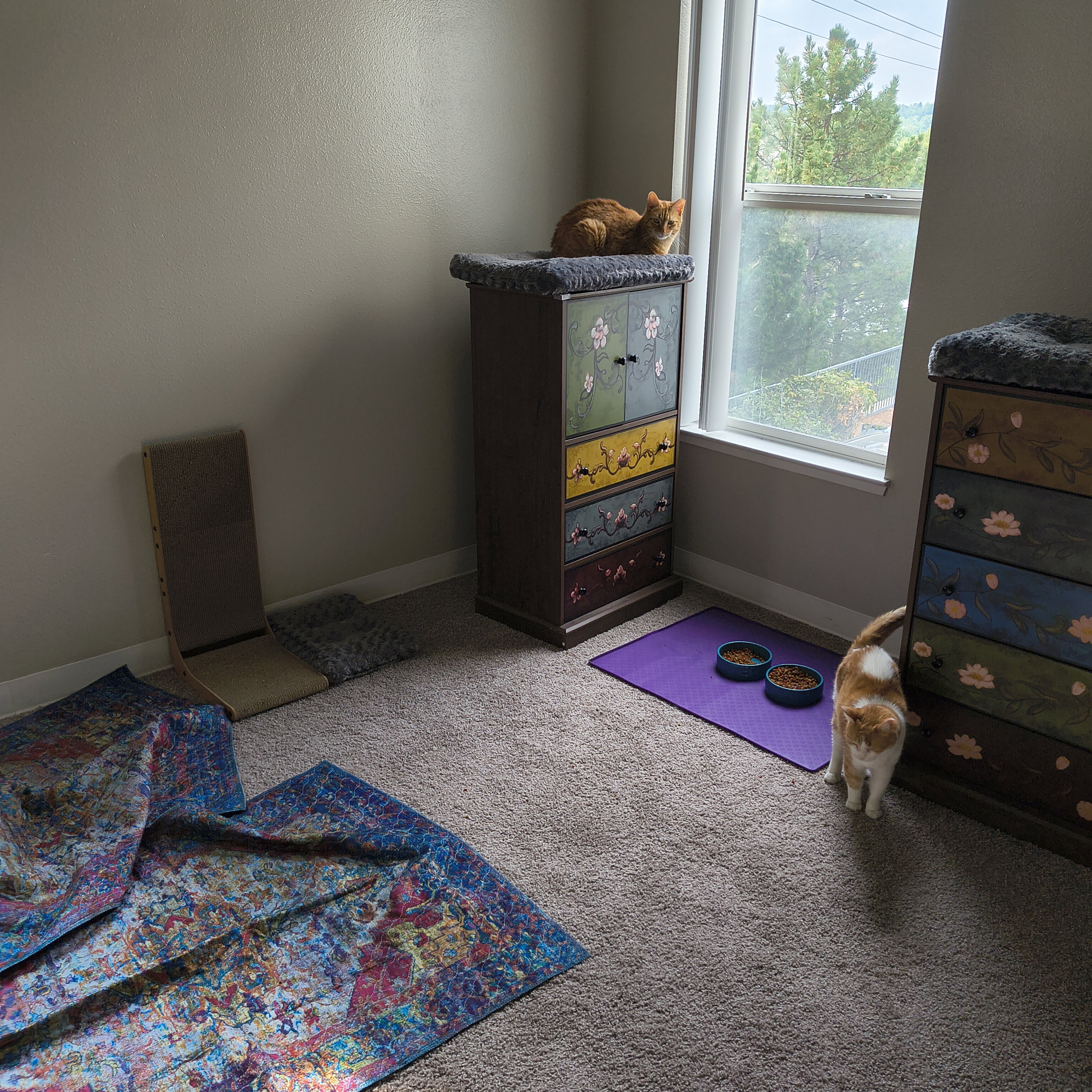
That's Sunny on top of the dresser and Patches again on the floor. The lump under the rug is Sherbet, the resident Ghost Kitty. Their first day in basecamp, they all four hid behind the dresser Sunny is on.
Space to hide: Don't push the furniture right up against the wall. Leave a gap for them to hide behind it the first few days. After our most recent move, they all hung out behind the dresser that Sunny is laying on in the picture above.
Food & Water: Be sure to keep fresh water accessible, as hydration is vital during stress. Your cat may have a decreased appetite initially. However, keep a close eye on their intake: if your cat refuses to eat anything at all by day two, contact a vet immediately or try tempting them with high-value treats, wet food gravy, or warmed bone broth.
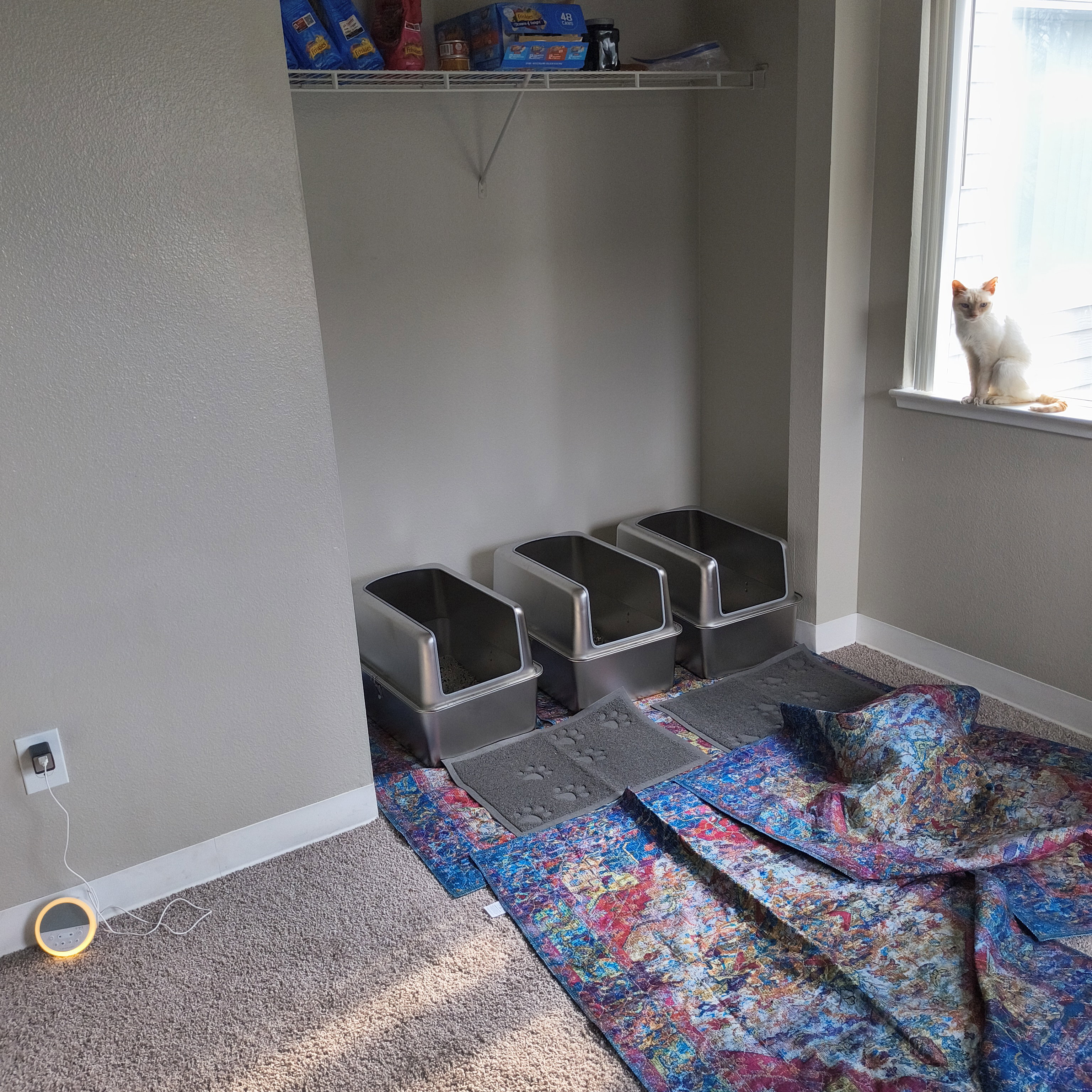
Remember I said I bought new litterboxes? There are them. And that's Yuki on the windowsill. (And Sherbet under the rug.)
Placement is key: Put their litterboxes on one side of the room and their food and water on the far opposite side. When they’re stressed, they’re even more sensitive to litter odors and cleanliness. Make sure to clean the box(es) daily.
Let the sun shine in: Make sure to open the vents so they get cooling or heating as appropriate. Do not open the windows!! They could easily pop the screens out and escape. But do open the blinds/curtains.
| Moving Tip: The Safety Net They Need Right Now During the first 3 days, your cat is in survival mode. If they accidentally pop a screen or slip past an unpacking door, a missing cat in a brand-new neighborhood is terrifying. Before moving day, let us audit your cat’s paperwork and chips to ensure a fast, painless reunion if the worst happens. Microchip Registry |
Do not pester them. Give them time to decompress in peace. Just ignore them for the first day or two other than to care for their physical needs. When they are ready for attention, they’ll let you know.
Drown out the chaos: Include a white noise machine on a low volume to drown out some of the new sounds and chaos of unpacking. I chose a babbling brook track and just left it going 24/7 for the first week. Consider getting one with a nightlight. They don't need much light at night but they do need some.
Different cats may adjust at different rates but don’t let one cat out without the others as when that cat returns, it could cause tension due to it smelling different. Wait until they’re all ready to leave the room together, which is anywhere from 1- 3 weeks.